
Motor Engineering and Manufacturing
USA Based Manufacturing, Engineering, and Support
Two Week Prototype Turnaround
Multiple Global Manufacturing Facilities
Millions of Motors Shipped Annually
ISO9001, AS9100D, TS16949 Certified
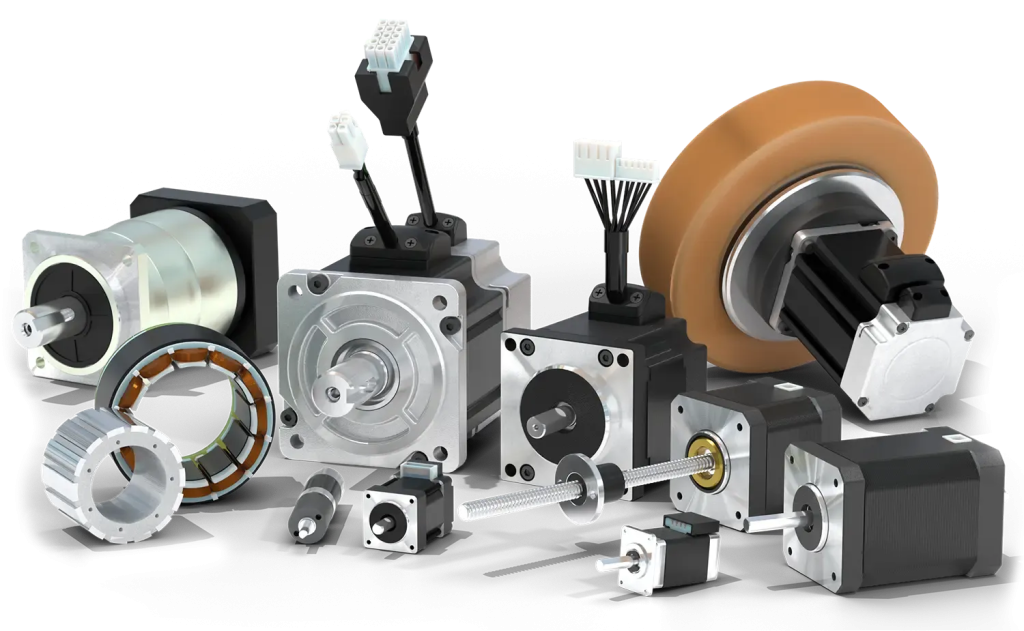
OEM Motors Optimized For Your Application
INTEGRATED MOTION CONTROL
Frequently Asked
Questions
Key technical answers for specifying integrated BLDC and DC servo motors in industrial automation equipment.
01 What are the benefits of an integrated DC servo motor with a built-in driver and encoder?
Integrating the motor, drive electronics and feedback device in one unit creates a compact motion-control solution. It reduces external wiring, installation mistakes and control-cabinet space, while supporting accurate torque, speed and position control with better electromagnetic compatibility.
02 How does an integrated BLDC motor improve reliability compared with separate motor and drive systems?
Factory-matched components and short internal connections eliminate many long motor-cable and external-driver links. This helps lower electrical risk and interference, and pre-set tuning contributes to more stable operation and a longer service life.
03 Which OEM/ODM customization options are available for integrated DC servo motors?
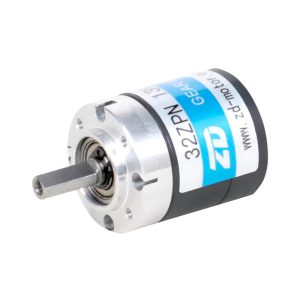
Common customization choices include shaft and flange configurations, planetary or worm gearboxes, electromagnetic brakes, encoders, cable assemblies and firmware parameter settings. These options allow the motor package to be matched to the machine's mechanical and control requirements.
04 What communication protocols can be used in automation systems?
Supported control interfaces include pulse control, RS-485 with Modbus-RTU and CANopen. This provides practical integration paths for PLCs, industrial PCs and motion controllers in automated machinery.
05 What power and voltage ranges are available for integrated BLDC and DC servo motors?
The available range spans 26 W to 1000 W, with common supply voltages of 24 V, 36 V, 48 V and 72 V. Select the final version according to the required torque, speed, load and available power supply.